Sep 18, 2026
Strong hearing health keeps you connected to the people you love, restores your confidence, and helps protect your cognitive health as you age, which is a connection that takes on special meaning during World Alzheimer’s Month this September.
Living with untreated hearing loss often means straining to hear, using extra mental energy just to keep up, and missing out on the effortless joy of clear sound. Addressing hearing health transforms daily life, which is why a recent update from the World Health Organization (WHO) is so significant for individuals and families here in Greensboro.
The WHO Makes a Landmark Connection
The WHO recently updated its official guidelines for reducing the risk of dementia. For the first time, it’s formally included treating hearing loss as a key recommendation, marking a major acknowledgment from a global health authority that your ears and your brain are deeply connected.
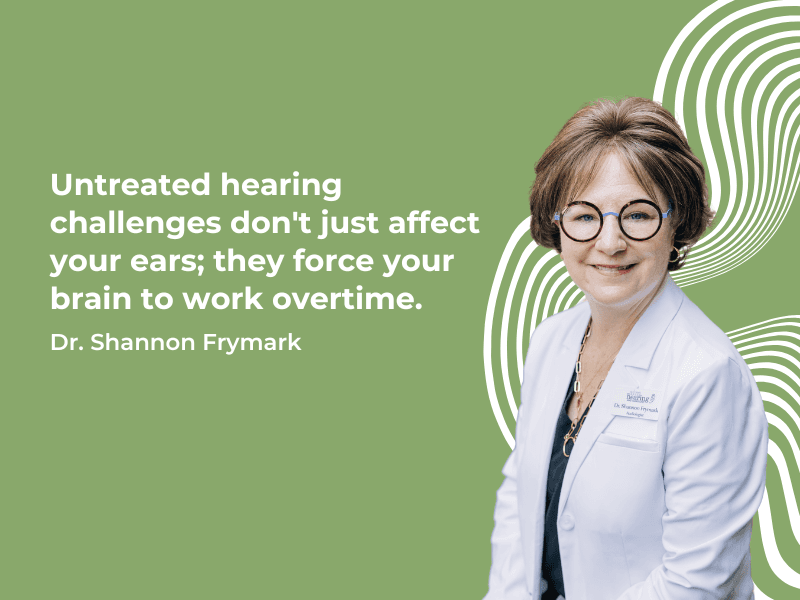
What does this mean in simple terms? The WHO now recommends that adults get regular hearing checks and, if hearing loss is found, use professionally fitted hearing aids or other hearing solutions. Untreated hearing challenges don't just affect your ears; they force your brain to work overtime.
Think of it like a computer running too many programs at once. When your brain is constantly struggling to decode jumbled sounds, it has less energy for other important tasks, like memory and thinking. Over time, this can contribute to cognitive decline.
Have you ever found yourself exhausted after a family dinner, even if you didn't talk much? Or do you find it particularly difficult to follow conversations when your family is around, especially kids with their high-pitched voices or if there’s background noise?
These are common experiences, and they highlight the mental workout your brain goes through when hearing is a challenge. By addressing your hearing, you can free up those mental resources, helping to protect your cognitive health.
The Power of Clear Hearing: Protecting Your Brain and Staying Connected
Addressing hearing challenges isn't just about restoring sound; it's a vital step in protecting your long-term cognitive health and preserving the relationships that matter most. When you hear clearly, your brain no longer has to work overtime just to decode speech. This frees up crucial mental energy, allowing you to process information effortlessly and stay sharp as you age.
As highlighted by the WHO, taking action on hearing health is one of the most effective, proactive ways to support lifelong brain function.
Equally important, treating hearing struggles keeps you actively engaged with the people and places you love. Whether you're enjoying family gatherings or meeting friends at a busy coffee shop, clear hearing gives you the confidence to stay involved rather than pulling away.
By keeping your brain socially and mentally stimulated, proactive hearing care empowers you to maintain strong connections with loved ones and fully participate in every stage of life.
Your First Step: A Compassionate Hearing Assessment
Recognizing this connection is the first step. The next is taking action. This is where our team at Aim Hearing comes in!
We believe in providing advanced hearing healthcare with soul and heart. When you visit our Greensboro, NC, hearing clinic, you’re not walking into a sterile doctor's office; you’re being welcomed into a space where you’re treated like family.
A comprehensive hearing assessment is a simple, painless process that gives us a clear picture of your unique hearing profile. We’ll then sit down with you, listen to your concerns, and explain our findings in a way that makes sense. You benefit from a team approach that puts your needs first.
If hearing loss is present, we can explore the best path forward together. This might involve advanced hearing aid technology, but it’s about more than just devices and a wave out the door.
You deserve a comprehensive care plan designed to help you reconnect with your world. For some, it might also involve exploring options for tinnitus or even cochlear implants.
Take Control of Your Hearing and Cognitive Health
This World Alzheimer’s Month, think about your hearing as a vital piece of your overall health puzzle. The evidence is clear: Taking care of your hearing is taking care of your brain. You can take proactive, common-sense steps to live a fuller, healthier, and more connected life.
Our team is here to guide you with professional and compassionate care. If you or a loved one is ready to take the first step, please contact our Greensboro office. Let's work together to protect your hearing and your cognitive health for the long run.
Frequently Asked Questions (FAQs)
Q: How often should I have my hearing checked?
A: Think of a hearing test like any other routine health check. The American Speech-Language-Hearing Association (ASHA) recommends that healthy adults get a hearing screening at least once every decade until age 50, and every three years after that. Here in our Greensboro office, we see the benefits of more frequent checks, especially for those who have a family history of hearing loss, work in a noisy environment, or have noticed any changes in their hearing. A quick, baseline test can give you peace of mind and a valuable point of reference for the future.
Q: Can hearing aids reverse dementia?
A: No, hearing aids are not a cure for Alzheimer’s or dementia. However, by treating hearing loss, they can help mitigate a significant risk factor associated with cognitive decline. When your brain receives clear sound signals, it can reduce your cognitive load, or the mental effort required to listen. This may help preserve your brain's resources for memory and other functions. The WHO’s inclusion of hearing care in its guidelines is focused on risk reduction and supporting brain health, not reversing existing conditions.
Q: I feel like my hearing is fine. Should I still be concerned?
A: Hearing challenges often sneak up on you; you may not even realize how much you've been compensating. Perhaps you've been turning the TV up louder, asking people to repeat themselves more often, or find yourself guessing at words. These are early signs. Getting a baseline hearing assessment is a proactive, positive step for your overall wellness. It allows you to take control of your health and ensures that if changes do occur, you’re in the best position to address them early.
Sources
WHO Updates Dementia Prevention Guidelines, Elevates Hearing Loss and Hearing Aid Use to Core Public Health Priorities | The Hearing Review
Risk reduction of cognitive decline and dementia: WHO guidelines | World Health Organization